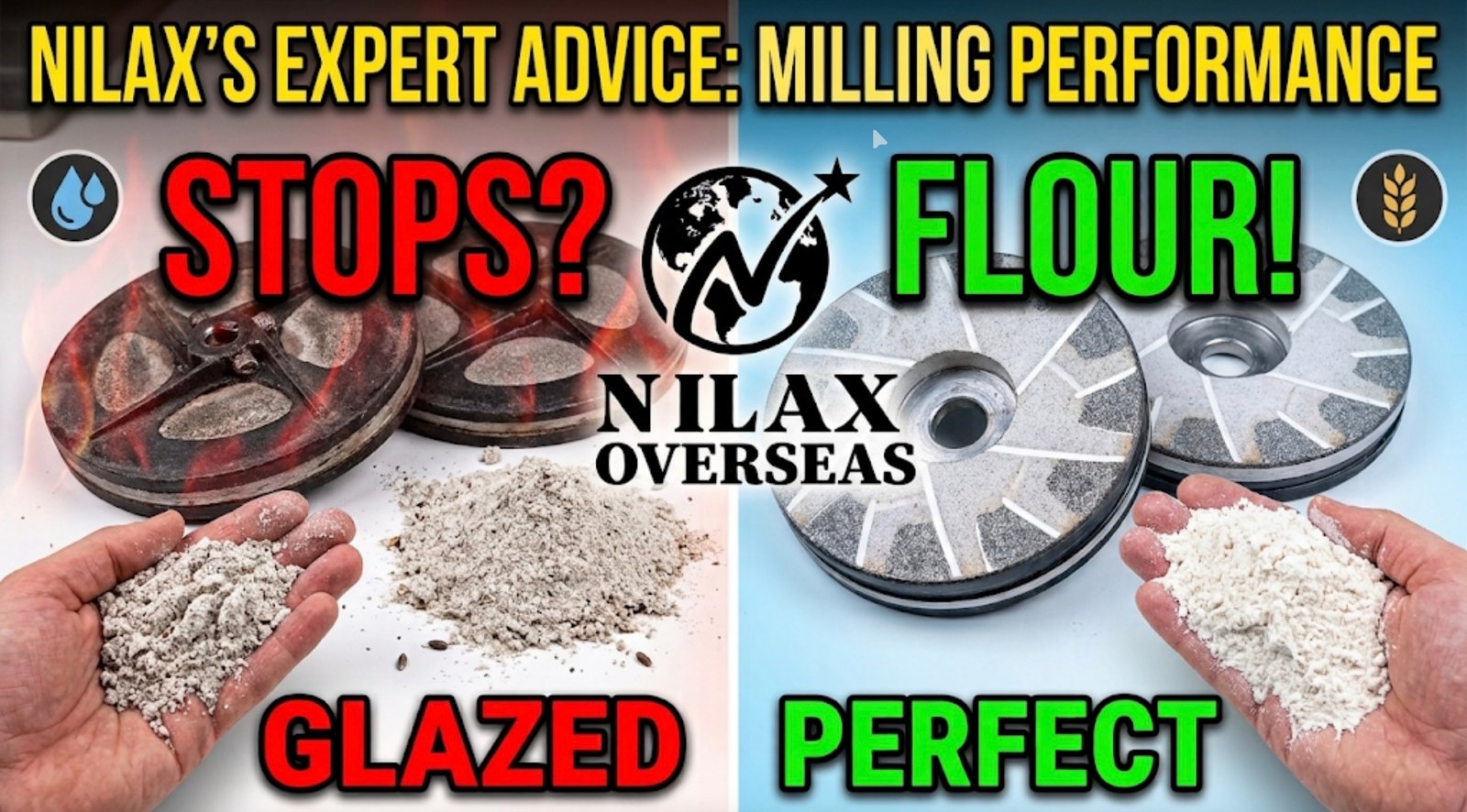
Whatever the size of your horizontal or vertical mill, the two grinding stones at its center are what actually determine your flour quality. A powerful motor or a well-tuned diesel engine won't save output that's suffering because the stones are glazed, mismatched, or seated incorrectly. Poor stone condition shows up as rough texture and excess heat in the finished flour — problems that are far easier to prevent than to fix after the fact.
Good stones start with good material. Export-quality emery stones are made from high-grade synthetic emery grains using aluminum oxide abrasives, chosen specifically to be tough while still running at low operating pressure. Keeping them at peak performance over thousands of operating hours comes down to a short list of habits that are easy to skip and expensive to skip:
Never run the stones dry. Letting them grind against each other without grain in the chamber — metal-on-stone or stone-on-stone — damages the stone face's dressing pattern almost immediately, and that damage doesn't reverse.
Watch what goes into the chamber. Small stones, metal debris, or excess moisture in incoming maize, wheat, or coffee can fracture a stone instantly. A quick visual check on grain quality before feeding is worth the thirty seconds it takes.
Store spare stones properly.Replacement pairs, available in standard 12- to 24-inch diameters and custom thicknesses, should sit elevated on wooden pallets and sealed against moisture if they're going to be in a humid warehouse for any length of time before installation.
Get these three things right and the stones stay properly dressed, which keeps the grind cool and preserves the natural oils and nutritional quality of whatever's being milled — which, at the end of the day, is the entire point of the machine.