Importers browsing grinding mill listings run into the same handful of terms over and over — RPM, motor power, hourly capacity — and it's common for these to get used loosely, as if they were interchangeable. They aren't, and getting them confused is one of the more expensive mistakes a first-time buyer can make, since it usually means either an underpowered mill or one burning far more energy than the job requires.
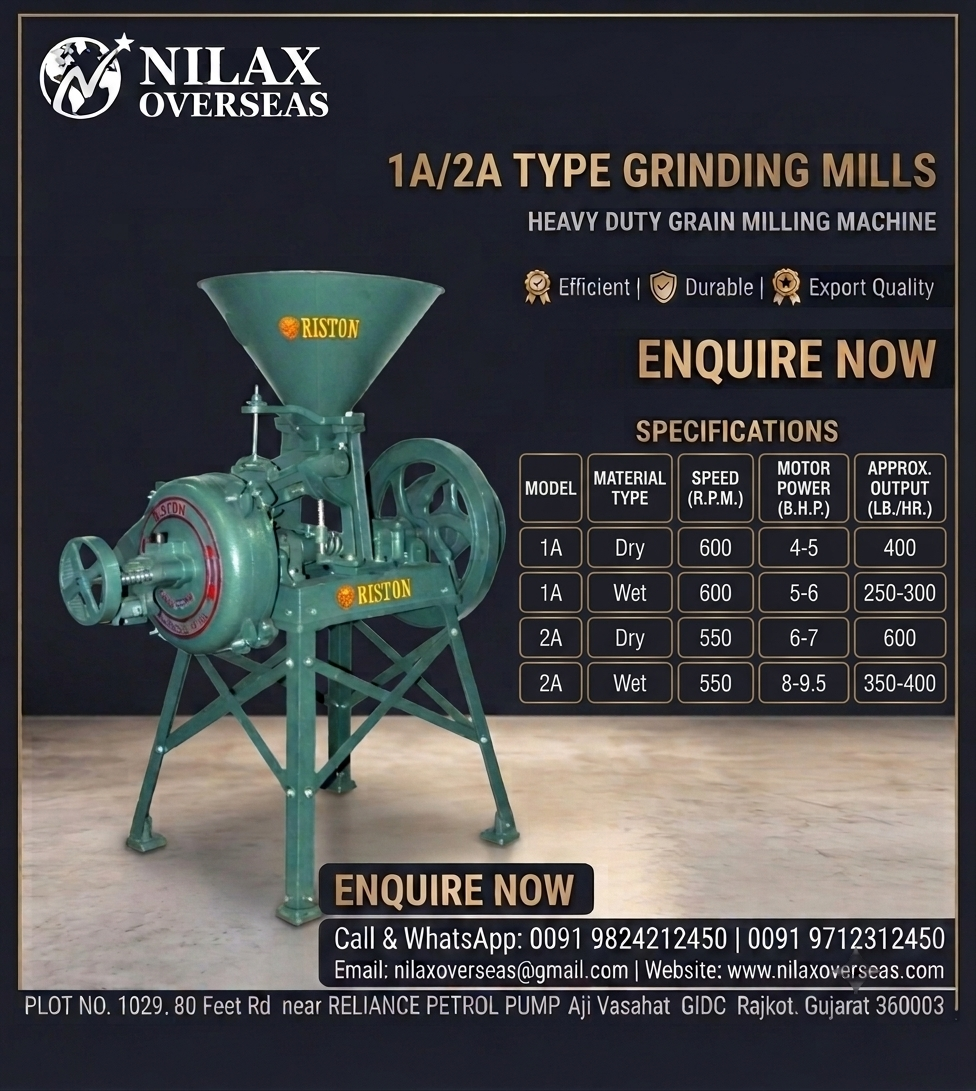
Rotational speed (RPM).Most standard vertical and horizontal grinding mills run efficiently around 1,500 RPM when paired with a standard electric motor or diesel engine. High-speed milling depends on precise balancing — if shaft speed drifts meaningfully from that range, the grinding plates wear unevenly, and that shows up as inconsistent flour texture long before the machine itself shows visible damage.
Power requirements.Smaller domestic units run comfortably on 3–5 HP. Heavier commercial Danish-type mills, particularly those in the 300–600 mm range, typically need 10–15 HP to keep a continuous grain feed moving without choking the mechanism. Undersizing the motor for the mill's mechanical load is one of the most common ordering mistakes we see.
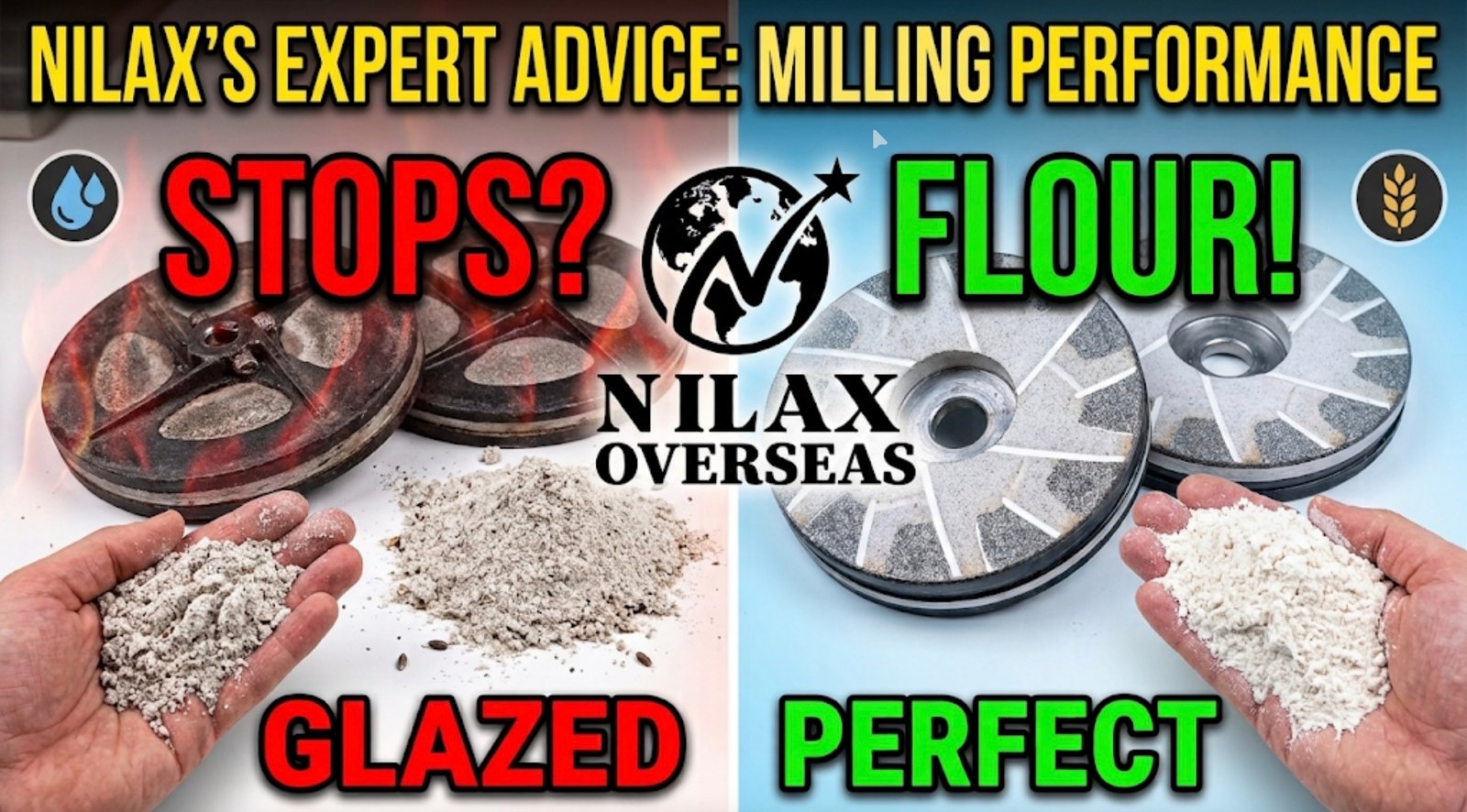
Throughput versus fineness. Output capacity isn't a fixed number — it moves with grain moisture and the mesh fineness you're targeting. Dry corn kernels fed into a 5 HP unit will produce steady, predictable output. Damp or poorly stored grain, on the other hand, clogs the stone grooves quickly and drops hourly yield well below what the spec sheet suggests, regardless of how well-built the mill is.
The last piece of the puzzle is matching your power source — single-phase, three-phase, or an independent diesel engine — to the actual mechanical load of the mill you've chosen. Get that pairing right, and the milling station stays profitable through the year rather than fighting against its own equipment.